The Length of Beauty
Ridhima Bhangay
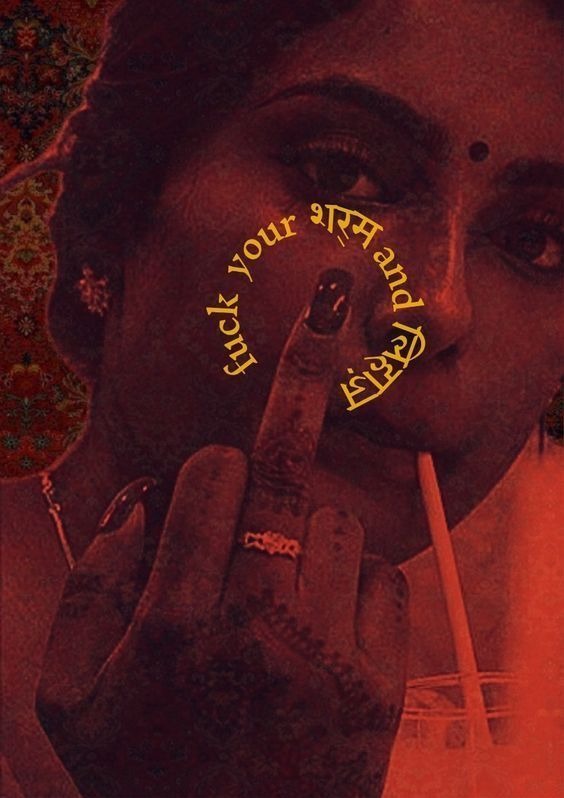
In fashion, proportions have always told a story. The sweep of a long silhouette, the precision of a petite frame, the quiet harmony of everything in between beauty exists in countless geometries. Yet for decades, the world insisted on reducing it to a single formula. Taller women were urged to soften their presence; petite women were encouraged to borrow inches wherever they could. And somewhere between these rules, the individuality of a woman’s form was lost in translation.
But a new era of style is unfolding one shaped by authenticity rather than archetypes. Today, beauty is less about conforming and more about inhabiting oneself with certainty. The modern woman is not asking for permission to be seen; she is stepping into the light with intention, rewriting the narrative in her own proportions.
In this story, we explore beauty through its natural gradients celebrating the tall, the petite, and every silhouette that defies categorisation. Not as opposites, not as comparisons, but as parallel expressions of identity. Each woman featured here has learned to navigate the world through the architecture of her body: the statuesque presence that enters a room before she does, the compact elegance that commands attention with quiet strength, the in-between forms that shift effortlessly between softness and structure.
Their voices reveal something deeper than style. They speak of early insecurities, of the subtle politics of height, of learning to carry themselves not in reaction to the world but in alignment with themselves. Through their journeys, we are reminded that fashion is not a size it is a vocabulary, and every woman has the right to write her own syntax.
This feature is a tribute to the diversity of the feminine silhouette. A reminder that beauty is expansive, dynamic, and far more interesting when untethered from convention. Because the future of fashion doesn’t lie in uniformity it lies in celebrating the exquisite variations that make every woman unmistakably herself.
Malliha Fatima — Fair Beauty
Malliha Fatima embodies fair beauty with elegance, confidence, and an awareness of the evolving conversation around skin tone in India.
Malliha Fatima
Fair Beauty – Grace in a Changing World
Malliha Fatima moves through the world with the quiet certainty of someone who has always been told she is beautiful and has chosen to carry that privilege with responsibility instead of arrogance.
She is fair-skinned, yes, the kind of fairness that once guaranteed billboards, matrimonial ads, and unsolicited compliments from strangers. Yet Malliha speaks about it not with pride or apology, but with awareness.
“As someone who falls into the conventional beauty standard, I know I haven’t faced the bias many others have,” she says softly. “But I also know that fairness was never the whole story. Even in our oldest poetry, dusky goddesses were worshipped. Krishna was dark and divine. Radha was golden-brown and adored. We always had both. We just forgot for a while.”
Today she watches the tide turn with genuine happiness. “Dusky beauties are owning runways, campaigns, magazine covers especially in the South, where diversity was never in question. The conversation has shifted from ‘fair is lovely’ to ‘all skin is lovely’. International influences have helped too tanned skin celebrated in the West, Black and brown skin finally getting global reverence. It’s beautiful to see India catching up to its own richness.”
Ask her what she loves about her face and she touches her cheekbones first. “My eyes and these cheekbones they frame everything. They make me feel like me.” But the real glow, she insists, comes from elsewhere. “Beauty is radiance. When you walk into a room and it lights up not because of your complexion, but because of your energy that’s true beauty. Aura over everything.”
Her only non-negotiable ritual? Sleep. “Beauty sleep is honesty,” she laughs. “And tired skin never lies. When I’m well-rested, my skin, my eyes, my whole presence tells the truth: I am taking care of myself. That is the ultimate luxury.”
Malliha Fatima is living proof that privilege, when acknowledged with grace, becomes a bridge instead of a wall. She stands on the side that was always celebrated and uses her place to pull everyone else into the light.
Dr. Jasleen Kaur — Embracing the Greys
Silver Streaks, Unapologetic Power
In 2023 Dr. Jasleen Kaur walked into a salon for what she thought would be a simple trim. She walked out almost bald, her long hair gone in one careless scissor-happy mistake.
“That day broke something in me,” she says now, running her fingers through thick silver-streaked hair that falls past her shoulders. “But it also freed me.”
She stopped dyeing. Stopped chemicals. Stopped everything. And when the greys grew in fully, she looked in the mirror and—for the first time liked what she saw.
“People lost their minds at first,” she laughs. “Indiranagar Gandhi jokes, aunties asking if I was going through a break-up, strangers telling me I looked ten years older. But something magical happened: the more comfortable I became, the more the world adjusted. Now people stop me on the street to say my hair is stunning.”
Her greys have become rebellion and refuge. “Only men were allowed salt-and-pepper cool. Actresses dye till they’re seventy. But why? These silvers are my story. Every strand is a year I survived, a degree I earned, a patient I helped, a heartbreak I healed. Why would I erase that?”
Her routine is pure Punjabi grandmother wisdom: homemade oil twice a week—onion juice, curry leaves, hibiscus, fenugreek, amla, coconut oil—massaged in with love. Natural shampoo, natural conditioner, homemade serum. Nothing more.
To every woman hiding her age under layers of dye, Jasleen has one message:
“Choose authenticity over acceptability. Age is not a flaw. Confidence is not something you buy in a box. Going grey has been the most liberating thing I’ve ever done for my beauty and my soul.”
Dr. Jasleen Kaur doesn’t just wear her greys. She wields them.
Nicy Joseph — Curly Hair Beauty
Curls That Found Their Way Home
Nicy Joseph’s curls used to feel like a stranger living on her head.
Straightening irons, keratin treatments, endless brushing anything to make them behave. “I spent years trying to disappear my texture,” she admits. “I thought curls were messy, unprofessional, too much.”
Then came the internet, curly girl groups, friends who gently said, “Just try washing it differently.” And slowly, painfully, magically—the curls came back. Bouncier. Shinier. More alive than ever.
“Learning to love my curls was emotional,” Nicy says, voice thick. “Every wash day felt like therapy. I was finally listening to my hair instead of fighting it. Today when I look at old straight-haired photos, I don’t recognise myself. My curls feel like home.”
She wants the myths gone: that curls are high-maintenance, that they only look good straight, that proper care has to be expensive. “I keep it simple—shampoo, conditioner, leave-in, sometimes gel, occasional deep mask. That’s it. Once you understand your curls, they become the easiest part of your routine.”
The shift in representation thrills her. “Curly hair is finally being celebrated. Salons for textured hair are opening everywhere. Brands are making products for us. Little girls with curls are growing up seeing themselves on billboards. That was unthinkable ten years ago.”
Nicy’s curls are no longer just hair. They are personality—wild, joyful, unapologetic. “They taught me to take up space. To be bold. To stop apologising for existing exactly as I am.”
When her curls bounce, the whole room feels it. That’s the magic only curly girls know.
Kiran Dembla — Athletic Beauty
Kiran Dembla embodies strength, resilience, and discipline, showing that beauty is as much about power and confidence as it is about appearance.
The Beauty of Iron and Will
Kiran Dembla does not walk into a room. She commands it.
At an age when many women are told to slow down, she is deadlifting twice her body weight, sculpting muscle that turns heads and breaks stereotypes.
“Beauty is not soft only,” she says, voice steady. “Beauty is also strength. Beauty is discipline. Beauty is showing up when you don’t feel like it.”
Fitness rebuilt her definition of beautiful. “I used to think it was about being thin or fair or having long hair. Now I know it’s about how powerful I feel when I finish a heavy set. It’s the pride in my shoulders, the strength in my legs, the knowledge that my body can do hard things.”
Consistency saved her. “One habit changed everything: never missing workouts. That discipline spilled into every part of my life mental toughness, purpose, confidence.”
She sees India finally valuing fit bodies, strong bodies, athletic bodies. “We’re moving past size zero. Women want to be strong, capable, unbreakable.”
On days when motivation hides, Kiran thinks of the women watching her. “I want to be the woman I needed when I was younger the one who proved that mothers, wives, daughters can also be warriors.”
Kiran Dembla is proof that beauty can have biceps, calluses, and a 200-kg deadlift PR.
And she looks damn good doing it.
Sofiya Sujad — Slim Beauty
Sofiya Sujad embodies a mindset that beauty is less about appearance and more about self-love, alignment, and feeling connected to oneself and the world.
Slim, Soft, and Unapologetically Herself
Sofiya Sujad is slim in a world that keeps trying to feed her opinions about it.
She has heard it all: too skinny, no curves, eat a burger, you look sick, supermodel or starving—pick one.
Her answer? Radical self-love.
“Beauty is taking it easy on yourself,” she says gently. “Your body is already working overtime. It’s not about how you look in a bikini—it’s how you feel when you’re loved, by others or by yourself. Cellulite, bloated belly, bra bulge, anaemia pallor—none of it makes you less.”
She dresses for the woman she is, not the stereotype. Ultra-feminine 50s silhouettes, corset tops, romantic necklines, cottagecore dresses that swish when she walks. “I dress girly because it makes my soul happy. Not because anyone told me to.”
The days she feels most beautiful? When her body, mind, and heart are aligned. When she is in love with life, with herself, with someone who sees all of her. “That’s the real glow-up. Not contour. Not weight gain or loss. Love.”
Sofiya is rewriting the slim girl narrative: delicate doesn’t mean fragile. Soft doesn’t mean weak. And loving your body exactly as it is today is the most powerful rebellion of all.
Rubab Mukkarram — Hijabi Beauty
Rubab Mukkarram embraces her hijab not just as a piece of clothing, but as an expression of faith, identity, and individuality. She proves that modesty and style can coexist beautifully, creating a unique narrative of strength and confidence.
Modesty as Magnificence
Rubab Mukkarram’s hijab is not a cover.
It is a crown.
“For me, hijab is identity, faith, belonging, pride,” she says, adjusting the soft georgette drape with practiced grace. “People think it’s just fabric. But every time I pin it, I’m reminding myself who I am and Whose I am.”
She pairs modesty with fearless style—pastels, layers, textures, statement sleeves, bold accessories. “Modesty doesn’t mean boring. I experiment every day. Hijabi fashion is art: proportions, colours, volume, drama—all while staying true to my values.”
Georgette is her love language. “It falls perfectly, stays in place, feels like air. I can run for a train or give a presentation and still feel elegant.”
She wishes the world understood one thing: hijab is not limitation—it is elevation. “We are covered, confident, and completely fashionable. Modern hijabis are proving you can be modest and magnetic at the same time.”
Rubab doesn’t reveal her hair or body. She reveals strength, creativity, devotion, joy. And that is the most beautiful reveal of all.
Bushra Lokeman — Plus-Size Beauty
Bushra Lokeman embodies confidence, self-acceptance, and the joy of embracing one’s body with pride. Her journey shows that beauty is as much about mindset as it is about appearance.
Plus-Size and Owning Every Inch
Bushra Lokeman used to care about opinions.
Now she wears bright colours, flowy dresses, gathered-sleeve blazers, and walks like the world like it was built for her size.
Because it should be.
“Confidence is acceptance,” she says simply. “I spent years trying to shrink—physically and emotionally. Then one day I decided: if I’m comfortable, if I feel good, that’s it. The rest can stay mad.”
She moves every day—30-minute walks, meditation, mindful eating—not to become smaller, but to feel alive. “Fitness isn’t a dress size. It’s energy. It’s peace. It’s joy in your body right now.”
Fashion finally catching up thrills her. "I’m really glad that brands are becoming so much more inclusive now. Earlier, I could only shop from one or two places, but today I can find my size in almost every brand — with more styles, more designs, and so many options. This shift has been propelled by plus-size influencers like Sakshi Sindhwani, Aashna Bhagwani, Shraddha Gurung, and Prableen Kaur, who’ve pushed the conversation forward. I hope 2026 continues to rewrite the rules, allowing everyone to wear what feels good, not just what is ‘allowed.’
Bushra’s message is fierce and tender at once:
“Be happy. Genuinely, stupidly happy in your skin. If my journey helps even one woman stop hiding, I’ve won.”
Bushra Lokeman doesn’t fit into the world’s boxes.
She broke them. And built a throne instead.
Ayesha Baquer — Wheelchair-Bound Beauty
Wheelchair-Bound, Soul Unbound
Ayesha Baquer’s beauty routine begins with presence.
Not perfection. Presence.
“Beauty today is knowing who you are, offering yourself gentleness on hard days, glowing because you’re doing what you love, and accepting that you are always becoming.”
Being a wheelchair user has not limited her body it has expanded her understanding of power. “My body is not a barrier. It is resilience in motion. It has carried me through things most people cannot imagine. That is my superpower.”
She dreams of a world where accessibility is not performative. “I don’t want a ramp as an afterthought. I want to be centered leading, creating, deciding. Not just invited to the table, but building it.”
When she dresses up, even seated, she feels invincible. “My style is my voice. Elegant, simple, completely me. The chair doesn’t diminish it it amplifies it.”
The biggest misconception she wants erased? That wheelchairs mean weakness. “This chair is freedom. It lets me live, work, love, create. Stop seeing the chair. See me.”
Ayesha Baquer doesn’t rise above her circumstances.
She rolls through them grace, power, and impeccable lipstick.
Beauty today, for me, is less about perfection and more about presence.
It lives in the quiet, genuine things
the confidence of knowing who you are,
the gentleness you offer yourself on difficult days,
the grace in how you treat others,
the glow of doing what you love,
and the peace that comes from accepting you’re evolving, not finished.
Beauty isn’t something I chase anymore; it’s something I cultivate by staying aligned with my values, my purpose, and my truth.
Shubhangi Soni — Tall Beauty
Tall, Bold, and Finally Proud
Shubhangi Soni stands 5’9” in a country that once told her to slouch.
“I was always the tallest girl class photos, family functions, everywhere. I hated it. Wanted to be petite, invisible, normal.”
Then came the lehenga moment. One perfect outfit that draped over her long frame like it was designed by the universe itself. “I looked in the mirror and thought: this is what my height was waiting for.”
Now she wears heels when she wants. Chooses clean, elongated silhouettes. Refuses to shrink. “Clothes fall differently on tall girls. We get drama without trying.”
Her message to every girl who feels “too tall”:
“One day you’ll realise your height was never the problem. It’s your gift. You were meant to be seen. Stand straight. Take up all the space you need. The world will adjust.”
Shubhangi doesn’t look down on anyone.
She simply sees further.
Susmitha Siddi — Melanin Beauty
Melanin Magic – Rich, Radiant, Revolutionary
Susmitha Siddi’s skin doesn’t glow under light.
It creates the light.
“Melanin isn’t darkness,” she says, voice warm with pride. “It’s depth. Layers. Goldens, olives, reds, warmth that moves with you. My skin catches sun and turns it into honey. That’s not a filter—that’s heritage.”
She grew up hearing she was “too dark,” faced the casual cruelty of colourism school taunts, family “jokes,” fairness cream ads that made her question her worth.
Then she started creating content for brown girls. And everything healed.
“Every tutorial, every shade match, every ‘this bronzer works on deep skin’ post was for younger me. And for every girl who thought her shade was a flaw. Seeing messages from women who finally felt seen… that rebuilt me.”
Her Brown Beauty Basics series is now a movement. “Brown skin has its own language. It deserves celebration, not correction.”
Her routine is devotion: SPF every morning, hydration, makeup that enhances not masks. Velvet blush, gold highlighter, lipstick that sings against her undertone.
To every brown girl still comparing:
“Your melanin is power. Your shade is identity. Wear it loudly. Let the world adjust.”
Susmitha Siddi doesn’t need light to shine.
She is the light.
To every girl who ever felt “too dark” or “not fair enough”:
Your shade is not the problem. Society’s lens is.
Your skin tone is your identity, your story, your heritage. When I film tutorials for brown skin, it’s for me and for you because you deserve to see your shade reflected and celebrated.
Don’t shrink yourself. Your melanin isn’t an obstacle; it’s your power. Wear it loudly. Let the world adjust.
And when you look in the mirror, remind yourself:
“This skin is mine.
It’s rich.
It’s radiant.
It’s worthy.”
Because you are.
Rishitha Jahnavi- Petite Beauty
Petite and Perfectly Unstoppable
Rishitha Jahnavi is 4’11” of pure voltage.
“Short girl fashion is the best playground,” she laughs. “We get to experiment—high-waisted everything, cropped tops, monochrome, oversized blazers, platforms, monochrome, colour-blocking. The rules are: there are no rules.”
She faced the height requirements in pageants, the side-eyes, the “you’re so cute” condescension.
Now she wins crowns anyway.
“Confidence looks like the day everything clicks—hair, makeup, outfit perfect. I walk out feeling unstoppable. Height becomes irrelevant when you carry yourself like you own the room.”
She used to wish she were taller. Now she wouldn’t trade an inch. “Petite girls have magic. We make clothes dramatic in our own way. We prove that power doesn’t need height—it needs posture, style, belief.”
To every little girl slouching in photos:
“Love yourself exactly as you are. Confidence is the tallest thing you’ll ever wear.”
Rishitha Jahnavi may be small.
But her presence?
Massive.
Beauty Without Borders
Indian Icons & Global Trailblazers
A revolution that started in India has gone global. These women—from runways in Paris to Hollywood screens, from London streets to American stages—prove that beauty has never been one story. It is every story.
Winnie Harlow
Vitiligo Victory – The Patchwork Queen
Winnie Harlow was told her skin was a flaw.
She turned it into a crown.
Born Chantelle Brown-Young in Canada to Jamaican parents, Winnie was diagnosed with vitiligo at four years old. The white patches that spread across her dark skin made her a target children called her “cow,” “zebra,” “dalmatian.” Bullies made her want to disappear.
Tyra Banks discovered her on Instagram. America’s Next Top Model made her famous. But Winnie made herself legendary.
“I never wanted to be the ‘girl with vitiligo’,” she says now, voice steady and fierce. “I wanted to be Winnie. The skin was just the packaging.” Today that packaging has walked for Victoria’s Secret, starred in Beyoncé’s visual album, fronted campaigns for Fendi, Puma, Glossier, and become the face (literally) of body diversity in fashion.
Her patches are no longer something to hide—they are signature. Makeup artists paint them on other models to mimic her look. Little girls with vitiligo send her photos saying, “You made me stop covering up.” She reads every message.
Winnie’s message is simple and devastating: “Your difference is your destiny. I was supposed to look like this. This is how God made me. And God doesn’t make mistakes.”
Winnie Harlow did not break the beauty standard.
She rewrote it in her own skin.
Harnaam Kaur
The Bearded Goddess – Holy, Hairy, and Whole
Harnaam Kaur has a full beard.
And she is breathtaking.
Diagnosed with PCOS at 11, her body began growing thick facial hair by the time she was a teenager. The bullying was merciless—children threw stones, called her “beardo,” “she-male,” “werewolf.” She tried everything: waxing, bleaching, shaving twice a day, hiding under hats and scarves.
At 16 she was baptised into the Sikh faith, which forbids cutting hair. That sacred rule became her liberation. She stopped removing the beard. Stopped apologising. Started living.
Today Harnaam is a Guinness World Record holder for youngest woman with a full beard, a model, speaker, life coach, and anti-bullying activist. She walks runways, stars in campaigns, and posts unfiltered selfies with the world can’t stop staring at—because she is stunning.
“My beard is my identity,” she says, stroking it with pride. “It is sacred. It is mine. It is beautiful. And if you don’t think so, that’s your problem.”
Harnaam Kaur turned the thing that almost killed her into the thing that made her iconic.
She is holy, hairy, and wholly herself.
Jada Pinkett Smith
Bald, Bold, and Finally Free
Jada Pinkett Smith shaved her head because alopecia did it first.
For years she hid the patches with wigs, braids, head wraps. Then one day she looked in the mirror and said, “I’m tired.”
She shaved it all off.
The world gasped. The Oscars slap happened months later, but the real moment was Jada sitting in her bathroom, running her hand over her smooth scalp, smiling like a woman who had just removed a mask she’d worn for decades.
“Being bald has been one of the most liberating experiences of my life,” she said on Red Table Talk. “I feel powerful. I feel free. I feel like a queen.”
She turned alopecia into alchemy. Suddenly little Black girls with hair loss saw a goddess on television who looked like them—bald and unbothered. Mothers sent videos of their daughters touching their own bald heads saying, “I want to be like Jada when I grow up.”
Jada didn’t just embrace baldness.
She made it royal.
Emily Kristen Morris
Cancer Survivor, Neck Scar, Unbroken Spirit**
Emily Kristen Morris has a thick, proud scar across her throat.
Thyroid cancer tried to take her voice. It failed.
At 27 she was diagnosed. Surgery left a permanent horizontal scar that no amount of makeup could hide. Chemo and radiation took her hair, her eyebrows, her sense of safety in her own skin.
She gave the world the middle finger and started posting anyway.
Today Emily is one of the most recognisable cancer survivors in body-positivity spaces modelling, speaking, creating content that says: scars are not defects, they are proof you survived.
“I used to hide my scar with chokers and turtlenecks,” she says. “Now I pose with my neck out on purpose. This scar is my battle wound. It’s my story. And I’m proud of the war I won.”
She partners with brands, walks in fashion shows, and has hundreds of thousands of survivors look at her and think: I can be beautiful too.
Emily Kristen Morris did not let cancer write the ending of her beauty story.
She took the pen.
This is Indian beauty in 2025.
Not one standard.
Eleven. And counting.
This Is Beauty in 2025 – And Forever
Look at them.
Fair skin that owns its privilege with grace.
Silver hair that refuses to apologise for time.
Curls that demand space.
Muscles that intimidate the timid.
Slim bodies that refuse to be sexualised or shamed.
Hijabs that prove modesty is power.
Plus-size bodies that take up every inch they deserve.
Wheelchairs that roll over every obstacle.
Height that touches the sky.
Deep brown skin that drinks the sun.
Petite frames that prove power comes in small packages.
Vitiligo patches that paint masterpieces.
Beards on women that challenge God and win.
Bald heads that shine like moons.
Scars that scream “I survived.”
These 15 women—11 from India, 4 from the rest of the world—are not exceptions.
They are the new rule.
Beauty is no longer a narrow corridor with one door.
It is an ocean.
And every single one of us—fair, dark, bearded, bald, scarred, short, tall, disabled, hairy, smooth, surviving—is already in the water.
We don’t need permission to swim.
We just need to stop waiting on the shore for someone to say we’re allowed.
The water is ours.
Dive in.
This is beauty now.
This has always been beauty.
We were just too afraid to see it.
No more.
Welcome to the revolution.
It looks like all of us.
Post a comment