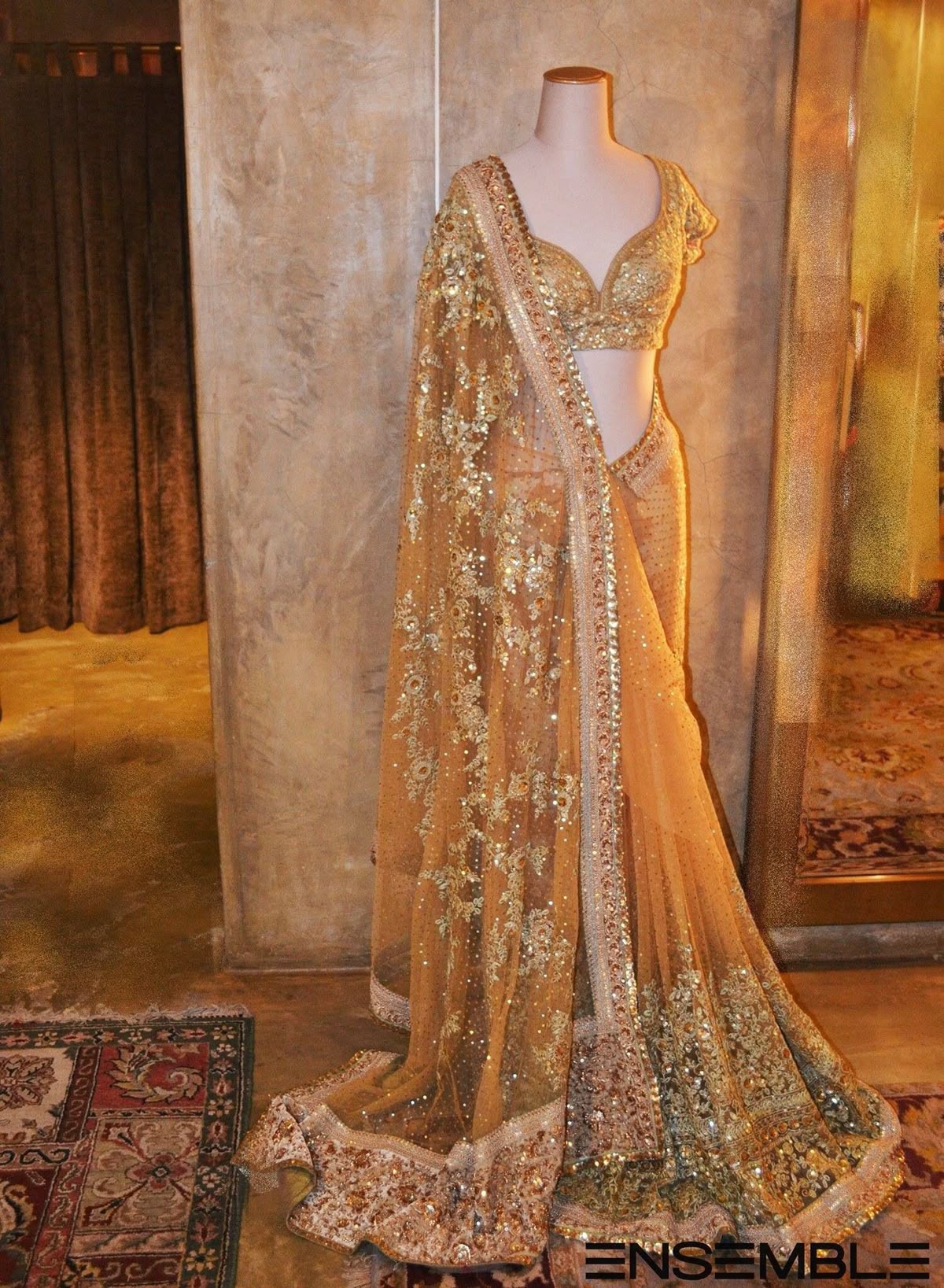
Hyderabad's Ethnic Elegance: A Curated Spotlight on the City's Top Designers
- Ridhima Bhangay
Hyderabad, the City of Pearls, has always worn its heritage like a perfectly draped Kanjeevaram opulent, unapologetic, and layered with stories of Nizami courts, Deccan dynasties, and modern multicultural mash-ups. From the labyrinthine bazaars of Laad Bazaar, where zardozi threads catch the light like scattered diamonds to the high-rises of Jubilee Hills buzzing with fusion fashion weeks, the city's ethnic wear scene is a living tapestry of tradition reimagined. Here, designers don't just stitch fabric; they weave narratives, drawing from Golconda's ancient weaves, Qutub Shahi motifs, and the subtle sheen of Bidriware into silhouettes that bridge bridal extravagance with everyday poise.
It's a scene fueled by artisan clusters in old Hyderabad, where handlooms hum late into the night, and pop-up ateliers in Banjara Hills experiment with sustainable silks and recycled gota. In 2025, with sustainable ethnic wear surging 35% in India (per recent FICCI reports), Hyderabadi labels are leading the charge: think organic khadi fused with laser-cut mirrors or velvet capes nodding to Mughal miniatures. This isn't cookie-cutter couture it's personal, powerful, and profoundly local, celebrating the woman who navigates boardrooms in Banaras brocades by day and sangeets in sequined shararas by night.
We've zeroed in on seven trailblazing designers, each a force in their own right: from Shravan Kummar's boho bridal reveries to Rimzim Dadu's architectural edge. For each, we've cherry-picked one Instagram-modelled look, diverse in form, vibe, and craft, to spotlight the magic. These aren't surface scans; they're deep dives into the threads' tales, the artisans' sweat, and the wearer's unspoken swagger. Whether you're curating a trousseau or craving that one standout for Diwali dazzle, consider this your insider's atlas to Hyderabad's heartbeat in haute form.
Shravan Kummar: The Bohemian Bridal Dream
Step into the dappled shade of a heritage haveli courtyard, where the air thickens with the low hum of rabab strings and the faint rustle of betel leaves being folded for guests—that's the world Shravan Kummar conjures with effortless alchemy. Their emerald silk lehenga, captured in a sun-kissed Insta reel from a recent bridal edit, is worn by a willowy model whose loose, henna-tattooed waves and kohl-smeared gaze evoke a nomadic princess mid-tale.
The skirt flares like a monsoon-swollen river, its panels hand-dyed in layers of verdant greens that shift from deep pine to lime sorbet under Hyderabad's relentless sun, each pleat weighted with zardozi embroidery of twisting vines not mere decoration, but a literal growth chart of the designer's rural Telangana roots, where motifs are sketched from wild neem branches foraged at dawn. Artisans in the label's Begum Bazaar workshop spend up to 40 hours per piece, layering gold-wrapped threads with microscopic precision, ensuring the vines "climb" asymmetrically for movement that mirrors a dancer's sway during the baraat.
The cropped choli, a whisper of sheer organza edged in scalloped lace, clings just enough to trace the model's lithe form, its crystal-embellished neckline dripping like morning dew on lotus leaves a deliberate nod to the city's pearl legacy, with Swarovski drops sourced from Laad Bazaar's pearl-mongers. Draped asymmetrically over one shoulder, the moss-velvet dupatta pools at the elbow like a forgotten lover's shawl, its frayed edges hand-torn for that lived-in romance.
This isn't bridal armour for the timid; it's a manifesto for the unbridled ideal for the Hyderabadi bride who wants to command her mehendi like a forest deity. In a season where sustainability whispers louder than screams, Shravan's use of surplus silk scraps, upcycled from old sarees, turns extravagance into ethos. Wear it, and you're not just dressed; you're descended from queens who ruled with roots and rebellion.
Ashwini Reddy: The Everyday Heritage Whisper
Dawn breaks over Hussain Sagar, casting a golden haze on joggers and chaiwallahs alike, and in that quiet hum of urban renewal, Ashwini Reddy's handloom cotton fusion kurta set emerges as the unsung poet of the everyday. Spotted in her story highlight from a casual ramp walk, the model with her high ponytail swinging like a temple bell rope and a stack of oxidised bangles clinking softly channels the unhurried grace of a woman threading through Begum Bazaar's morning market, bargaining for fresh mogra.
The burnt ochre hue, a deliberate echo of Telangana's sun-baked plateaus, is woven on pit looms by cooperatives in Puttaparthi, the cotton's irregular slubs adding texture like whispered secrets in the weft. Each yard is a testament to the designer's commitment to reviving forgotten handloom villages, where weavers earn fair wages for patterns passed down matrilineally.
The kurta's asymmetry is its soul: a high-low hem scalloped like the edges of a vintage Bandhani dupatta, skimming ankles on one side while grazing knees on the other, allowing breezy movement for Hyderabad's sticky afternoons. Belted at the waist with a chunky gold chain, forged from recycled temple jewellery, the silhouette cinches without constraining, creating a gentle hourglass that flatters without fanfare.
Mirror work adorns only the sleeves, tiny irregular discs hand-appliquéd in the shape of Bidriware inlays, catching errant sunbeams like fireflies in a jar—not overwhelming bling, but a quiet sparkle that rewards close inspection. Paired with straight-leg pants in the same ochre, subtly printed with faded paisleys that bleed like watercolour memories, this set defies the "occasion-only" ethnic trap. Ashwini's philosophy, "heritage as habit, not heirloom" shines here, blending grandma's loom with Gen-Z minimalism. Slip it on, and you're not just clothed; you're carrying the city's pulse.
Sowmya Reddy Fashion Studio: The Dramatic Diwali Bloom
As fireworks crackle over the Golconda ramparts, painting the night in bursts of gold and crimson, Sowmya Reddy's chiffon anarkali unfurls like a nocturnal lotus in full, defiant bloom. From her latest carousel post showcasing a Diwali preview, the model glides with the poise of a classical dancer mid-arabesque, her updo crowned with jasmine strings that mirror the garment's cascading ruffles.
Pistachio green chiffon, lightweight as a sigh yet voluminous as a monsoon cloud, layers in tiers from the high neckline, each ruffle hand-pleated and stitched with invisible seams for a fluidity that swirls like incense smoke during aarti. The drama peaks at the waist, cinched by a pearl-encrusted band, sourced from Hyderabad's pearl divers, the lustrous orbs knotted in silk threads by women artisans in the old city's mohallas.
Full sleeves balloon then flare into embroidered cuffs, where silver-thread paisleys twist like vines reclaiming a forgotten trellis a motif drawn from the designer's childhood sketches of Falaknuma Palace's overgrown gardens. Sowmya's edge lies in the details: hidden pockets for your phone and eco-lining from banana fibre, nodding to the label's zero-plastic pledge. In Hyderabad's festive frenzy, this anarkali is your secret weapon, elegant enough for family photos, bold enough to eclipse the rangoli.
Vasireddy's The Design Studio: The Festive Fusion Fury
Envision the thrum of a mehendi mela in full swing, dhol beats pounding like heartbeats, henna artists etching tales on palms, and in the midst of it all, Vasireddy's crimson georgette sharara suit erupts like a Mughal miniature come alive. Pulled from their festive drop reel, the model owns the frame with squared shoulders and a defiant chin, her jhumkas swinging like metronomes to an invisible qawwali rhythm.
The pants billow wide as a courtesan's fan, their georgette panels gathered at the ankles with gota patti borders in molten gold laser-cut and hand-appliquéd by a team of 20 in the studio's Hi-Tech City outpost. Topping it is a short jacket, its tailored silhouette a masterclass in fusion: padded shoulders for architectural edge, fastening with oversized buttons carved from camel bone, etched with geometric jaali patterns.
The crimson isn't flat—it's ombre-dyed from ruby red to blush pink at the hems, evoking the blush of a bride's first stolen glance. This look screams mehendi mayhem: practical for all-night dancing, yet polished enough for Instagram lives. Vasireddy's ethos, "ethnic with an edge," shines in reinforced seams for durability, and modular elements like detachable sleeves for day-to-night versatility.
Jayanti Reddy: The Cocktail Power Pulse
Twilight descends on the yacht club by Hussain Sagar, where champagne flutes clink against the lap of waves and the skyline twinkles like a string of pearls. Enter Jayanti Reddy's sapphire velvet gown, a hybrid beast that prowls the line between red-carpet rebel and rooted ritual. Featured in her cocktail couture series on Insta, the model struts with the coiled energy of a panther, her high collar framing a gaze that's equal parts intrigue and invitation.
Crafted from heirloom velvet looms in Kanchipuram, the gown's deep blue hue hugs the body in a mermaid silhouette, embroidered in resham waves that crash in silver and indigo, hand-stitched over 50 hours. A daring side-slit reveals embroidered leggings beneath—cotton churidar panels inked with Telugu folk motifs of peacocks and lotuses. The detachable cape, fluttering like a superhero's mantle, is the showstopper, lightweight chiffon edged in sequins, fastened with a brooch of antique kundan.
This is cocktail couture with a conscience the velvet's bio-wash finish repels stains, and inner linings from recycled PET bottles align with Jayanti's carbon-neutral collections. Wear it, and you're owning the room, a velvet vortex of velocity and valour.
Kaastaan by Divaa Jain: The Sheer Reception Spell
In the hushed glow of a wedding reception hall, Kaastaan by Divaa Jain's tissue-green lehenga casts a spell of translucent temptation. From their bridal '25 preview post, the model poses with the languid poise of a lotus eater, her back turned to reveal the lehenga's low-drape magic.
Tissue silk, so fine it rivals spider silk, floats in layers that catch breath like fog over the Deccan plateau, the green shifting from mint to emerald in the light. Hand-embroidered with cutdana beads in vine patterns, each glassy orb faceted by hand in Jaipur, sewn in a cross-body drape allowing pleats to fan like a peacock's tail during the jaimala exchange.
The low-back blouse in faded rose pink organza ties at the nape with silk cords, its minimalism a counterpoint to the skirt's opulence. Jain's innovation includes embedded RFID tags for authenticity tracking and organic sizing charts. This lehenga isn't for the shrinking violet; it's for the reception queen who wants sparkle without the scratch.
Rimzim Dadu: The Armored Urban Edge
City lights bleed into the night over Necklace Road, a neon vein pulsing with ambition, and Rimzim Dadu answers with her charcoal raw-silk pant-suit a sartorial sword, sharp as a stiletto, draped in the armour of ancient epics remixed for the now. Debuted in her urban ethnic edit reel, the model commands the lens like a boardroom warrioress, one hand on her hip, the slashed thigh flashing skin like a challenge issued.
Raw silk, rough-hewn from Assam’s mulberry groves, grounds the charcoal gray in tactile grit. The straight-leg pants slice high on one thigh in deliberate asymmetry, vent edged in black sequins forming geometric shards. The cropped jacket, wired stiff at the seams, buttons asymmetrically with horn toggles carved in tribal motifs.
Hyderabad’s ethnic wear landscape is an ever-expanding canvas of imagination, tradition, and reinvention. What makes it stand apart from the rest of the country is not only the deep cultural resonance of the city, with its old-world bazaars and palatial heritage, but also the way its designers have been able to translate that into clothing that feels fresh, modern, and globally relevant. Each designer that we looked at brings something distinct to this evolving narrative. Anushree Reddy, with her delicate pastel florals and whimsical embroidery, has carved a space in the hearts of brides who want to look ethereal without losing the drama of celebration. Jayanti Reddy, by contrast, leans into heritage handlooms and muted tones, allowing her ensembles to exude gravitas and timelessness, almost like walking heirlooms that can be passed from one generation to another. Shravan Kumar continues to ground his practice in the weaves and crafts of India, proving that sustainability and rootedness can coexist with glamour.
The city also makes room for designers who want to bend the rules. Rimzim Dadu’s sculptural approach to fabric manipulation turns a sari or jacket into a work of wearable art, making tradition feel radically contemporary. Divaa Jain through Kaastaan pays homage to India’s textile richness but with a couture-like finesse that appeals to modern sophisticates. Ashwini Reddy, Sowmya Reddy, and the team at Vasireddy’s Design Studio all add further textures to the scene with their ability to fuse trend-led design with traditional motifs, ensuring that Hyderabad remains not just a city of memory but also of experimentation.
What is remarkable here is how the city has fostered a spectrum rather than a single look. There is the romantic bride, the serious aesthete, the cultural revivalist, the rebel artist, and the young cosmopolitan who wants her lehenga to sparkle on Instagram but still nod to her grandmother’s craft legacy. Together, these designers prove that “ethnic wear” is no longer a monolithic category reserved only for festivals or weddings. Instead, it has become a living, breathing expression of identity that can shift depending on mood, setting, and intention.
Hyderabad’s fashion ecosystem has matured into one that balances commerce with conscience. The heavy investment in handwork and handlooms sustains artisans across the country, while the innovative silhouettes ensure that these garments remain aspirational on a global stage. Wearing one of these creations is no longer simply about looking beautiful. it is about making a statement of values, heritage, and individuality.
As the city continues to grow as a fashion capital, these designers remind us that the real luxury lies not in excess but in meaning. Each garment holds within it the skill of countless hands, the memory of age-old traditions, and the boldness of a designer willing to reinterpret them for today’s world. Hyderabad’s ethnic wear scene, then, is more than fashion. It is a conversation between past and present, between craft and creativity, and between the personal and the collective. To step into one of these outfits is to step into a story, and perhaps that is the truest definition of style.
Post a comment